Weaving Heritage
The Living Heritage of Maheshwari Sarees: From Ahilyabai Holkar to Modern Runways
R
Reoti Handloom Craft Studio
Maheshwar Craft Studio
18 September 2026
4 min read
"Discover how Queen Ahilyabai Holkar invited master weavers from Surat and Malwa in the 18th century to create the iconic lightweight Maheshwari saree featuring royal fort motifs."
## A Royal Legacy Woven in Gold & Silk
The story of the Maheshwari saree is intrinsically tied to the visionary Maratha Queen, **Rajmata Ahilyabai Holkar** of Malwa. In the late 18th century, Queen Ahilyabai sought to design special royal garments and presents for dignitaries and royal guests visiting the historic capital of Maheshwar along the sacred Narmada River.
She personally invited traditional master weavers from Surat, Malwa, and South India to establish looms in the fort complex. Ahilyabai herself designed the earliest motifs, inspired by the intricate stone carvings on the walls of the Maheshwar Fort and the gentle ripples of the sacred Narmada river.
### The Iconic Characteristics of Maheshwari Craft:
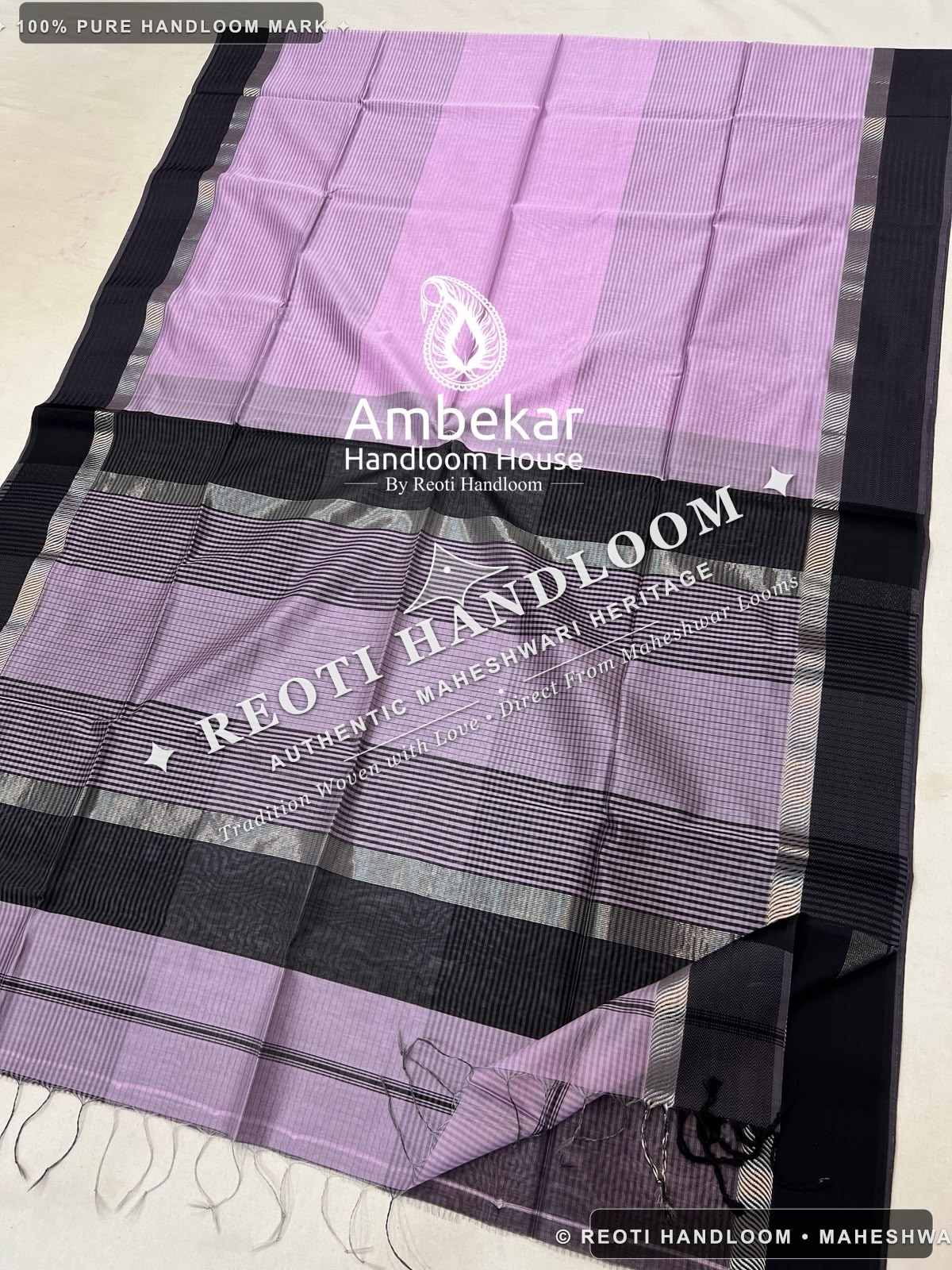
1. **The Reversible Border (Bugdi / Karvat)**: A hallmark feature of genuine Maheshwari sarees is the reversible border, allowing the saree to be worn from either side with flawless finishing.
2. **Feather-Light Silk Cotton Blend**: Unlike heavy traditional silks, Maheshwari handlooms are celebrated for their airy lightness and regal shimmer, keeping the wearer cool in summers and regal in winters.
3. **Architectural Motifs**: Famous motifs such as *Chatai* (mat pattern), *Chameli* (jasmine flower), *Eent* (brick pattern), and *Heera* (diamond) continue to be handwoven with pure Zari threads.
Today, Reoti Handloom continues this royal tradition directly working with authentic third-generation weaver families in Maheshwar.
Reoti Handloom Maheshwar
Handcrafted with generational devotion along the holy Narmada Fort looms.